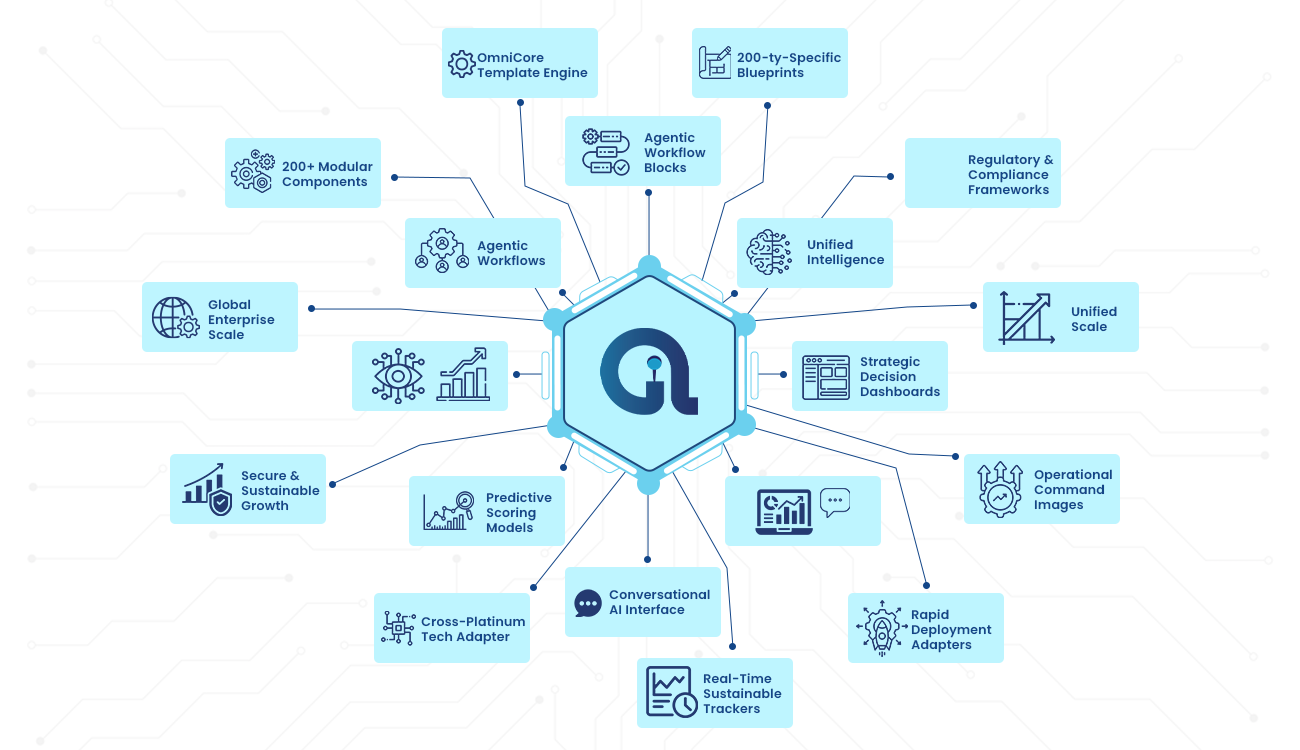
Unified Operations: Eliminating Fragmented Tools with AI Orchestration
Fragmentation Is an Execution Problem
Most enterprises don’t fail due to the lack of a strategy - They fail due to execution breakdowns.
AI - Orchestration solves this by ensuring:
- The right task reaches the right team
- At the right time
- With the right context
What Is AI Orchestration?
AI - Orchestration is the ability to:
- Trigger workflows automatically
- Coordinate actions across departments
- Adapt execution based on real-time signals
Unlike traditional automation, AI - Orchestration is:
- Context-aware
- Predictive
- Adaptive
What Unified Operations Look Like in Practice
Examples:
- A drop in store footfall triggers marketing action
- A compliance risk alerts legal and operations
- Demand spikes initiate staffing and inventory workflows
Human-in-the-Loop by Design
AI - Orchestration does not remove humans.
It elevates them.
Humans intervene where:
- Ethics matter
- Exceptions arise
- Strategy is required
Business Outcomes of Unified Operations
- Reduced operational delays
- Lower coordination overhead
- Better scalability
- Consistent execution across locations